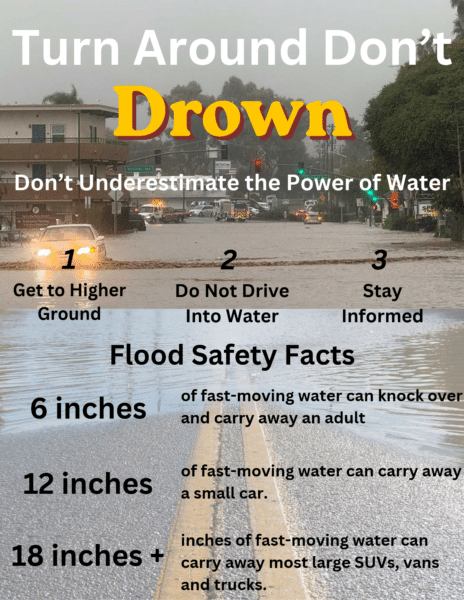
With the potential for increased rainfall this winter, the City wants to remind you about the importance of flood preparedness. Flooding is actually the most common disaster in the United States. Entering flood waters can lead to injury or death. Just 6 inches of moving water is dangerous.
Floods may be caused by a number of different scenarios including result from rain, snow, coastal storms, storm surges and overflows of dams and other water systems. It can develop slowly or quickly. Flash floods can come without warning. The effects of flooding can cause power outages, disrupt transportation, damage buildings and create landslides.
Preparing for a flood involves making a plan for your household, including your pets so that you and your family know what to do, where to go, and what you will need to protect yourselves from flooding. Learn and practice evacuation routes, shelter plans and flash flood response. Know your neighborhood and be aware of routes to and from work and school which typically flood. View FEMA’s Flood Maps. Gather supplies, including non-perishable foods, cleaning supplies and water for several days, in case you must leave immediately or if services are cut off in your area.
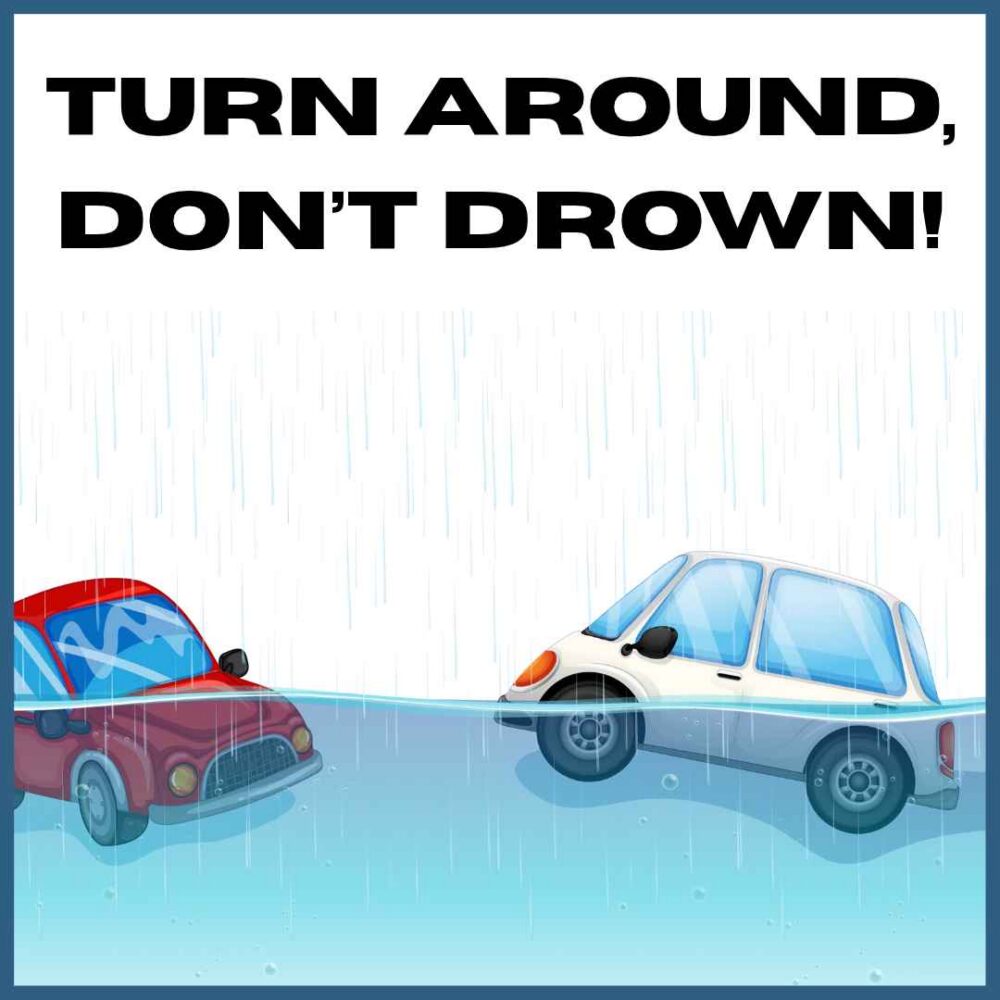
During a flood, do not walk, swim or drive through flood waters. Turn Around. Don’t Drown!
After a significant flood event follow these recommendations:
- Pay attention to authorities for information and instructions. Return home only when authorities say it is safe.
- Avoid driving except in emergencies.
- Wear heavy work gloves, protective clothing and boots during cleanup and use appropriate face coverings or masks if cleaning mold or other debris.
- Be aware that snakes and other animals may be in your house.
- Be aware of the risk of electrocution. Do not touch electrical equipment if it is wet or if you are standing in water. Turn off the electricity to prevent electric shock if it is safe to do so.
- Avoid wading in floodwater, which can be contaminated and contain dangerous debris. Underground or downed power lines can electrically charge the water.
Thank you for taking the time to be prepared.